When hoodie orders start to outgrow flat garment printing
Hoodie work often arrives in bursts, school orders, sports clubs, corporates, church groups and winter promotion runs all need the same artwork across different sizes. The job sounds simple until the garment thickness starts affecting platen height, ink coverage, transfer alignment and the amount of pressure needed for a clean finish. A light T shirt setup can struggle here, particularly on brushed fleece, heavy cotton and polycotton hoodies where the print needs to sit cleanly and last through regular washing.
For many South African print shops, hoodie decoration becomes profitable when the process is repeatable. That means knowing which garments suit direct print, which are better for transfers, and how much time the team needs per unit. In Midrand, Sandton, Pretoria and the East Rand, we see more demand for short run colour work and reorders, so the equipment has to cope with 20 pieces one week and 200 pieces the next. A good setup gives you speed without forcing you to cut corners on placement or cure quality.
Typical equipment set for thicker garments and repeat runs
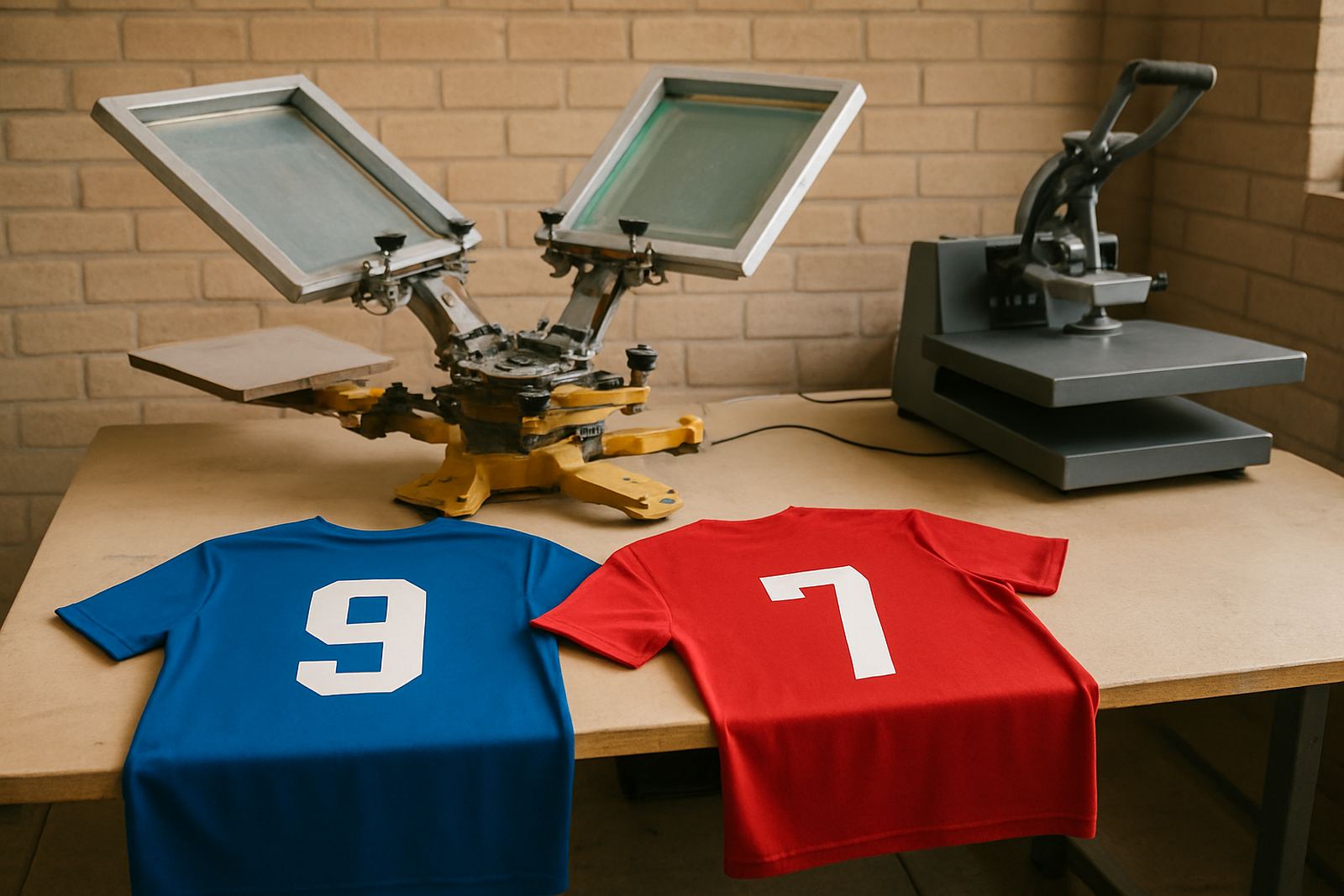
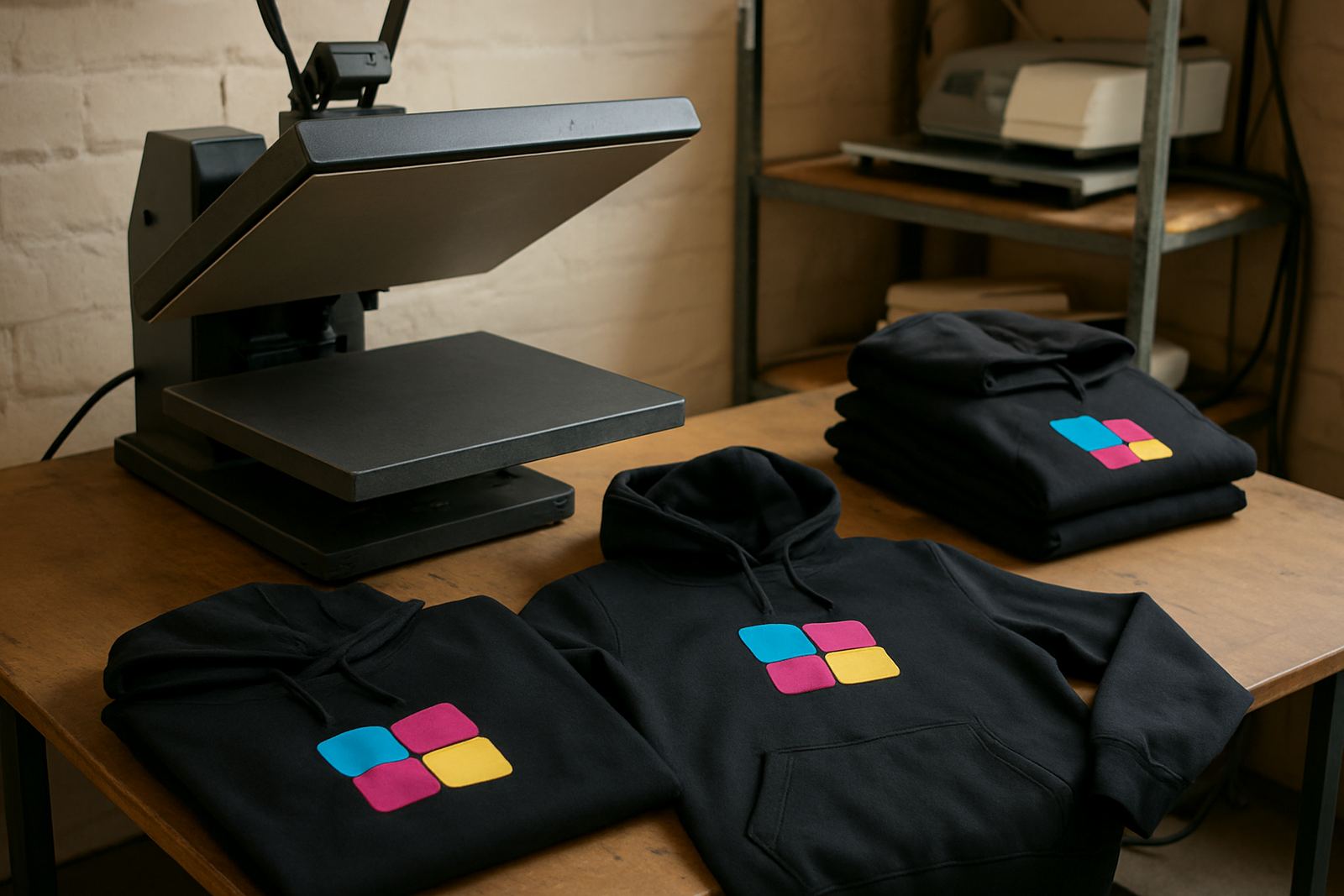
A practical hoodie line usually combines printing, transfer and finishing tools rather than relying on one machine to do everything. The exact mix depends on the artwork style, fabric type and budget, but most shops start with a print engine suited to colour work, a transfer press for accuracy, and support equipment that keeps media, powder or toner handling under control.
- Digital printer or transfer printer for full colour artwork and repeat sizes
- Heat press with even platen pressure for chest, back and sleeve placements
- Drying or curing support where the process requires it
- Colour calibration tools for consistent repeat orders
- Media storage and handling area for films, papers or transfer sheets
- Basic cleaning and maintenance kit for daily printhead care
Where shops handle both hoodies and labels, a combined workflow can make sense. The same team can run garment decoration in the morning and label output in the afternoon, provided the workflow is planned properly. For many operations, that is where the numbers start making sense because the machine hours are being used across more than one revenue line.
Layout planning that keeps hoodies moving through the shop
Hoodie decoration needs space more than people expect. The garments are bulkier, the stacks take up more room, and the pressing area must stay clear so operators are not folding sleeves back and forth near hot surfaces. If the shop is in a shared unit in Midrand or a light industrial building in the East Rand, allow for a clean receiving area, a print zone, a pressing zone and a packing table. That separation helps reduce mistakes and keeps garments from picking up dust or lint.
For shops that power down during load-shedding, planning matters even more. Equipment should be matched to the available power supply, especially if you are running presses, dryers and support devices at the same time. A stable backup plan can save a whole production day when a school or corporate order is due. We also suggest checking municipal rules for extraction, noise and safe storage where presses or heat tools are used in tighter units.
- Keep hoodie blanks sealed until use to reduce dust and moisture exposure
- Mark out print size guides for chest, back and sleeve positions
- Store dark and light garments separately for faster picking
- Leave enough cooling space before folding and packing
- Use a clear route from print to press to dispatch
Common mistakes that cost time and spoil garments
One of the most common mistakes is treating hoodies like ordinary tops. Thick seams, zips, hoods and pouch pockets all affect pressure and alignment. If the press setup is not adjusted properly the transfer can ghost, crease or lift at the edges. Another issue is choosing artwork that is too fine for the garment and the decoration method. Bold logos, block colours and solid text usually hold up better than tiny details on textured fleece.
Colour handling also causes trouble. If repeat orders are not profiled and matched, the second batch can come out slightly different from the first, and clients notice. Shops in Johannesburg often get reorders months later, so keeping a good reference is important. Toner or media that is not suited to the fabric can also lead to fading or a rough hand-feel, which is not great when the hoodie is meant to be worn every week.
- Pressing over seams without testing pressure first
- Skipping pre press steps and trapping moisture in the fabric
- Using artwork that is too detailed for the garment size
- Mixing garment batches without checking colour and size codes
- Ignoring maintenance until the machine starts dropping quality
Budget ranges in Rand for a sensible start
Budget depends on whether you are starting from scratch or adding hoodie work to an existing print room. A smaller operation focused on local clubs and schoolwear can begin with a modest transfer setup, while a shop taking corporate and reseller orders will need better throughput and tighter quality control. For many South African buyers, the real decision is not only the machine price but the total cost of installation, training, consumables and backup support.
As a broad guide, a practical entry setup for hoodie decoration may start from about R85 000 to R180 000. That can cover a capable printing or transfer system, a press and basic setup items. A more productive mid-range line for regular repeat orders often sits between R180 000 and R450 000, especially if colour control, maintenance cover and operator training are included. Larger shops handling regional volume, label work and garment runs can move beyond R450 000 depending on output needs and finishing requirements. It is usually better to buy for the next 18 months of work, not only the current month.
Support that keeps repeat apparel orders on schedule
Hoodie production is less stressful when the team knows the routine. Installation, operator training, preventive maintenance and colour calibration all play a part in keeping the order book moving. For shops serving Gauteng and neighbouring countries, remote support can be useful when a machine needs a setting checked or a workflow question comes up mid run. That kind of help saves courier delays and reduces downtime.
Consumable planning also matters. Hoodie orders tend to come in size runs and colour breaks, so it helps to keep stock of the right media, cleaning supplies and replacement parts before the busy season starts. If you are working through winter demand or year end corporate gifting, a late supply can hold up the whole job. Good planning means fewer surprises and a cleaner handover to packing and dispatch.
A practical fit for print shops serving the region
Hoodie decoration suits shops that want durable, visible branding on thicker garments and need to turn the same design across multiple sizes with consistent quality. It works well for print shops in Midrand, Sandton, Pretoria, the West Rand and beyond when the workflow is matched to the order type. The best results come from a setup that can handle bold graphics, careful placement and repeat production without overcomplicating the process.
If your shop is balancing garment decoration with labels or other short run colour work, it is worth choosing equipment that gives you room to grow. That way the hoodie orders do not become a production headache, they become a steady line of work that keeps the press warm and the team busy.