Low-noise air for everyday finishing work
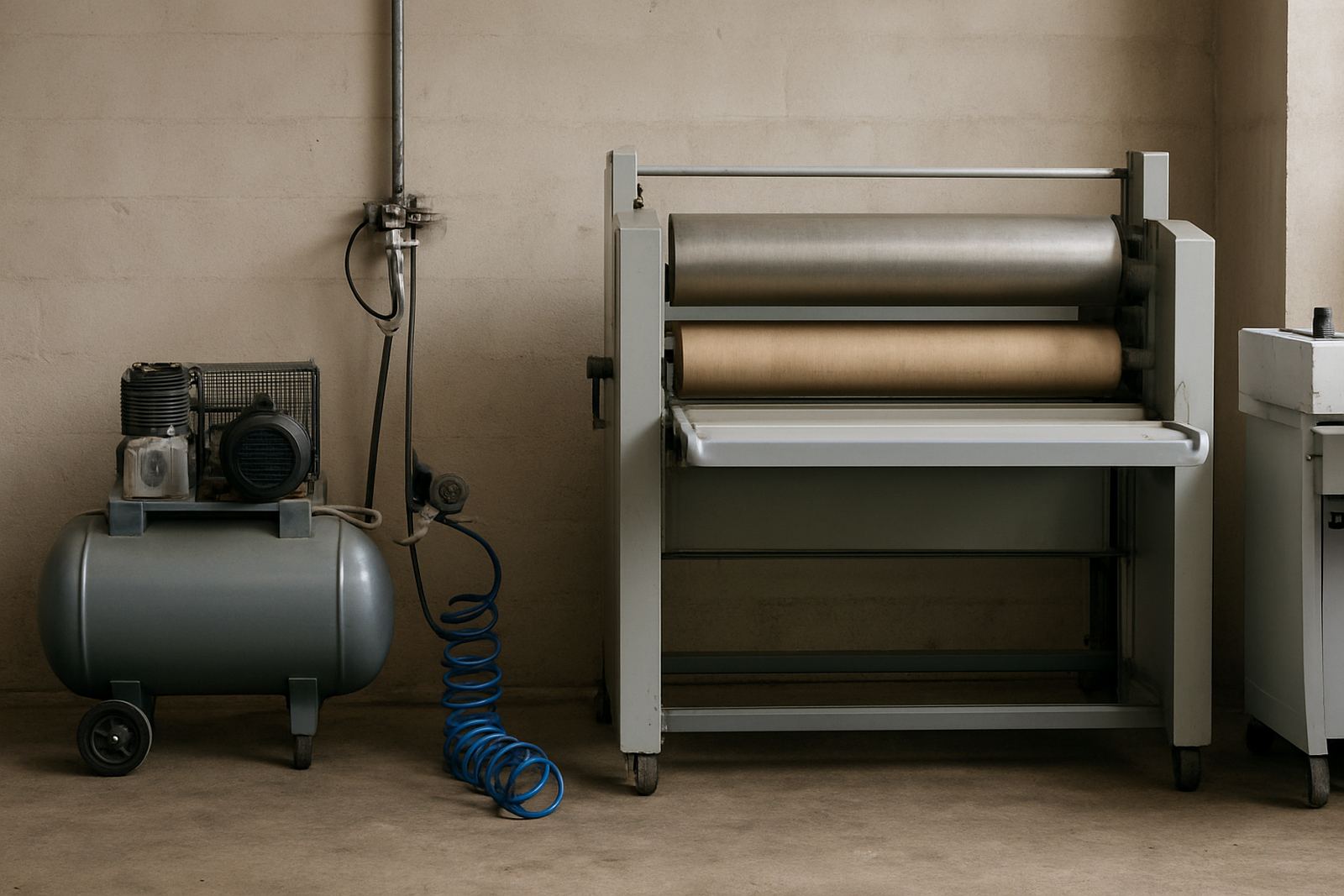
The quiet air compressor is designed for print finishing and light workshop support where a standard piston unit is simply too loud. In a busy room with cutters, laminators, heat presses and label finishing kit, lower noise makes a big difference to concentration and communication. It is especially useful when the compressor runs often through the day, or when the unit sits close to operators rather than in a separate plant area.
These compressors are commonly used for short bursts of clean compressed air, not for heavy industrial tools. That makes them a good fit for duties such as blowing dust from media, helping with pneumatic clamps, small air-assisted finishing devices, and selected label or garment production steps. In many cases a smaller, well specified unit is better than oversizing and paying for air you do not use.
Sizes and options to match the job
We supply quiet compressor options in different tank sizes and output levels so you can match the machine to the duty. A compact unit suits a single workstation or a small label room, while a larger tank is better where the compressor cycles often or where several users draw air at different times. If your operation is in Midrand, Sandton, Pretoria or further afield, the right choice depends more on demand than on floor space alone.
- Small tank units for light intermittent use and tighter spaces
- Mid-size tanks for regular finishing work and shared stations
- Higher output units for longer run times and faster recovery
- Oil-free options where cleaner air is needed for sensitive tasks
- Filtered air packages for better protection against dust and moisture
For coastal or humid conditions, a unit with proper drying and drainage matters. In Durban, Gqeberha, Maputo and other moisture-heavy areas, trapped water in the line can cause poor performance and extra wear. A quiet machine still needs the right air management around it.
Where it suits in a print shop or workshop
This type of compressor suits spaces where noise control matters and the air demand is moderate. It works well in garment decoration rooms, label finishing spaces, sample rooms, small production areas and support benches. It is also useful in mixed workshops where staff move between machines and need a quieter environment during long shifts.
It can support tasks like cleaning fine dust from machine housings, operating air-assisted accessories, or feeding small pneumatic functions on selected equipment. It is not intended to replace a full plant compressor for large automation or heavy-duty air tools. If your business runs extended hours, or if you operate around load-shedding schedules, it is worth thinking about recovery time and the number of start-stop cycles too.
- Print finishing counters
- Label printing and converting rooms
- Garment decoration production areas
- Small maintenance bays
- General workshop support
Installation, power and site needs
Installation is usually straightforward, but the site must be planned properly. The compressor needs clear airflow around it, a level floor, and enough room for cleaning and servicing. In hotter rooms, poor ventilation will shorten motor life and increase cycling. If the unit sits in a closed cupboard or a cramped corner, heat build-up becomes a real problem.
Power requirements vary by size. Smaller quiet compressors may run from standard single-phase supply, while larger units can need dedicated electrical provision. Before ordering, check the available supply at the site, the breaker capacity, and whether the machine will need a plug-in point or hardwired connection. In some premises, especially older buildings in central Johannesburg or older industrial parks, electrical checks should be done before delivery. It saves time and avoids a second visit.
- Confirm single-phase or three-phase supply
- Check breaker size and cable condition
- Allow space for venting and access to drains
- Keep the unit away from wash-down areas and direct sunlight
Care, servicing and long-term reliability
Like any air system, a quiet compressor performs best when it is kept clean and checked regularly. Drain moisture from the tank and line traps, inspect hoses and couplings for leaks, and keep intake filters clear of dust. Leaks are often small at first but they force the compressor to work harder, which means more heat and more wear.
Preventive maintenance is especially important where the compressor runs every day or where workshop dust is heavy. A proper service schedule helps protect valves, seals and pressure controls, and it also keeps air quality more consistent. If the unit starts cycling more often than usual, makes a change in sound, or takes longer to build pressure, that should be checked early before it becomes a breakdown. A little attention now saves a bigger repair bill later.
What to check before you order
When ordering a quiet air compressor, it helps to be specific about the actual task. We recommend checking the intended application, the expected run time, the air pressure needed, and whether the unit will be used by one operator or several. If the compressor must fit into a small room or move between sites, size and weight also matter. For cross-border supply into neighbouring countries, transport, voltage and local servicing access should be confirmed too.
Useful order details include the type of air outlet required, whether a receiver tank is needed, and whether filtration or drying is part of the package. If the compressor will support sensitive media or label work, ask about oil-free operation and clean air handling. When in doubt, share the machine details, the room size and the duty cycle. We can help match the compressor to the work instead of guessing.
- Required pressure and air flow
- Available power supply on site
- Tank size and footprint limits
- Need for drying, filtration or oil-free air
- Spare parts and service support needs
Our team in Midrand supports print shops across South Africa from Sandton to Pretoria, the East Rand, West Rand and further into Southern Africa. If you need a quiet compressor for a practical print environment, we can help you choose the right unit and keep it working properly.
Key facts
| Product type | Low-noise air compressor for print finishing and workshop support |
|---|---|
| Typical use | Light pneumatic tasks, cleaning, clamps and selected finishing functions |
| Tank sizes | Compact and mid-size receiver options available |
| Power supply | Single-phase or three-phase depending on model |
| Noise profile | Reduced operating noise compared with standard workshop compressors |
| Support | Installation, maintenance and remote technical guidance available |