Start With The Job You Need To Print
Before you buy consumables, match them to the kind of work you do most often. A shop printing 20 logo jobs a day has different needs to a garment decorator running mixed sizes, names and numbers, or a label printer handling fine type and small barcodes. Short runs need stable colour, clean release from film, and a powder that bonds without leaving a heavy hand feel.
In Gauteng, shops often battle dry winter air, dust and load-shedding. On the coast, humidity changes how film releases and how powder flows. If you print for schools, promotions or workwear, keep a record of the fabrics you use most: cotton, polycotton, nylon blends and darker garments all need different handling. That one page of notes can prevent a lot of trial and error.
- List your top 10 garment types and fabric blends
- Note the average print size and daily volume
- Record whether you cure with a conveyor dryer, heat press or compact curing unit
- Keep the room temperature and humidity in the same log
Choosing DTF Inks For Clean Colour And Reliable Flow
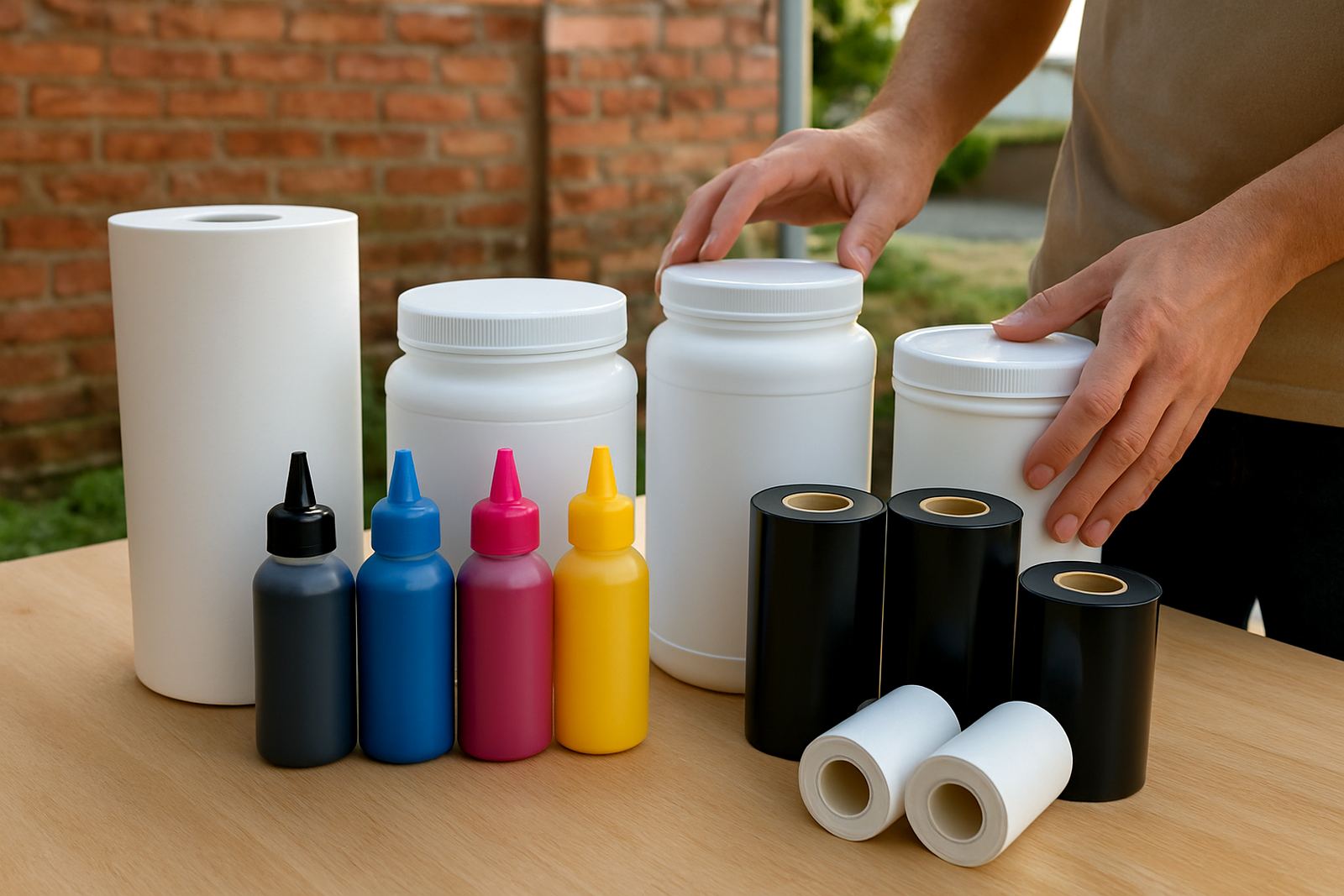
Ink quality affects everything from white underbase coverage to how well the print survives washing. For DTF work, you want ink that runs smoothly through the heads, stays consistent from bottle to bottle, and cures without cracking or dulling too much on the garment. If the ink separates quickly or leaves heavy sediment, you will spend more time cleaning lines and less time printing.
White ink deserves special attention. It is thicker than colour inks and needs regular circulation, gentle agitation and proper storage. In a hot Midrand production room, keep bottles sealed and away from direct sunlight. Do not top up old stock with fresh stock unless you are certain the batch is compatible. Mixing batches can change flow and colour balance in ways that are hard to correct later. A little care here saves a lot of head wear.
- Check that the ink is made for your printhead type
- Confirm curing temperatures and wash performance for the fabrics you print
- Use sealed containers and rotate stock by date
- Inspect white ink every day for settling and clumps
Film Selection: Release, Finish And Dimensional Stability
Film is not just a carrier for the print. It affects detail, transfer consistency and how the finished graphic feels on the garment. Some films release better on warm peel, others need cold peel. Some carry fine line work very well, while others suit larger solids. If you print small lettering for labels or chest marks, you need film with good dimensional stability so the image does not stretch or distort under heat.
Keep an eye on the coating side, because loading the film the wrong way can spoil a whole stack. In humid areas, film can curl if stored badly, and then feeding problems start straight away. Store it flat, in sleeves if possible, and keep it away from floor moisture. If your shop has power cuts, do not leave open packs near windows where dust can settle on the coated side. That dust shows up later as pinholes or weak transfer points.
- Confirm whether the film is hot peel, warm peel or cold peel
- Test fine detail, solid blocks and small text before bulk production
- Store flat in a dry room, away from heat and dust
- Keep one sample pack for repeat tests on the same garment type
Powder Application And Curing Without Guesswork
The powder does the bonding job, so even coating matters. Too little powder and the print will lift or wash out. Too much and the hand feel gets heavy, edges look messy, and curing becomes uneven. Use enough powder to cover all inked areas, then shake off the excess before curing. The aim is a light, even layer that melts into the print, not a thick crust.
Curing should be checked with a simple routine, not by eye alone. If the powder is undercured, the transfer may feel chalky and crack after washing. If it is overheated, the film can shrink or the adhesive can become brittle. Every shop should have a set cure test on its main fabric types. On power-limited sites, plan around inverter capacity or generator stability so temperature stays steady during long runs.
- Apply powder evenly and remove loose excess before curing
- Run a wash test on cotton and polycotton every week
- Watch for smoke, shine or a hard surface, these often mean overheating
- Keep powder containers closed when not in use to avoid moisture pickup
Daily Checks That Prevent Waste And Reprints
Most consumable problems show up early if you look for them. Before the first job, check white ink circulation, nozzle health, film feed, powder dryness and heater temperature. If the shop is quiet after loadshedding, print a small test patch and confirm that colours line up, whites are solid and no dust marks have appeared on the film. It is faster to stop for 10 minutes than to lose a full roll of work.
Keep a simple checklist at the machine. The person opening the shift should know what a normal print looks like, what a starved white channel looks like, and when to call for technical help. In busy shops, one missed step can mean several bad garments before anyone notices. Small habits keep the line moving and protect margins, especially when jobs are short and repeat orders need to look the same every time.
Storage, Stock Planning And Ordering For South African Conditions
Consumables last longer when they are stored correctly. Ink should sit in a cool, dry room. Film should stay flat and clean. Powder should remain sealed and away from moisture. If your area gets high summer heat, avoid keeping stock in a container office or in a room with no airflow. For branches supplying across Johannesburg, Pretoria and the East Rand, the difference between a well-kept storeroom and a damp one is often the difference between stable output and frequent rework.
Plan stock around lead times and usage, not only price. A cheaper bottle means very little if it arrives late and your team sits idle. For shops serving neighbouring countries, keep extra stock for border delays and courier interruptions. If you print names, sportswear or promo items for seasonal peaks, order ahead and track consumption by roll, litre and kilogram so you can forecast the next month properly.
- Keep a minimum stock level for ink, film and powder
- Track monthly usage by product type and garment type
- Separate current stock from old stock with clear date labels
- Allow extra cover before school, corporate and sports seasons
How CMYK Industries Supports Reliable DTF Output
When consumables are matched to the machine and the workload, print shops get fewer call-backs and better day-to-day consistency. Our team in Midrand supports shops across South Africa with consumable planning, workflow advice, colour calibration, media profiling and breakdown repairs when the line stops unexpectedly. That includes practical help for printhead care, operator training and preventive maintenance, because the best consumable in the world still needs a clean and well-tuned machine behind it.
If your shop is starting with DTF or trying to stabilise an existing line, begin with samples, then lock in the settings that hold over a full shift. Test the same film, same powder and same ink on your main garments, then keep those settings written down. It is a simple discipline, but it saves time every week and helps your team print with more confidence.