What a clamshell heat press does in daily production
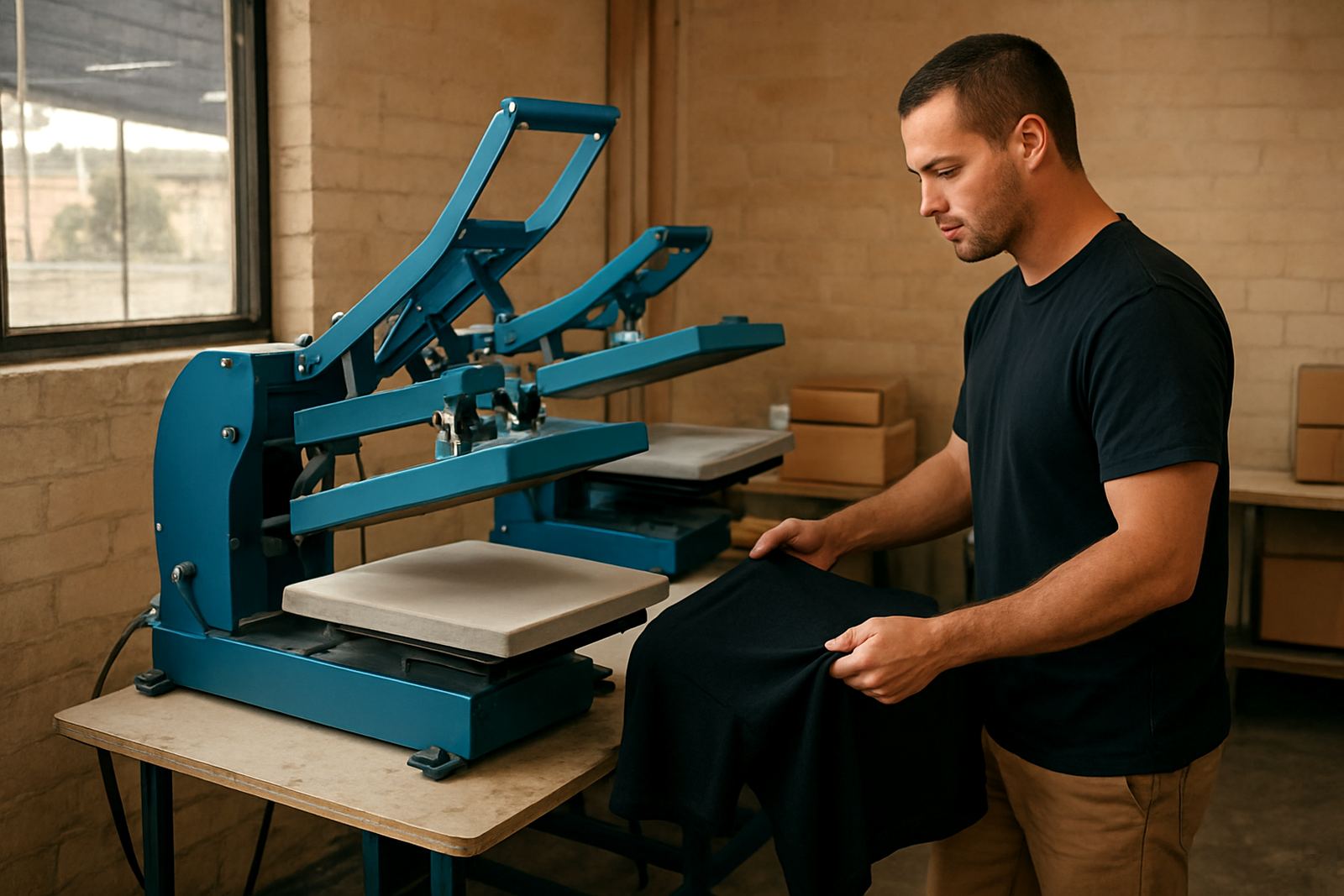
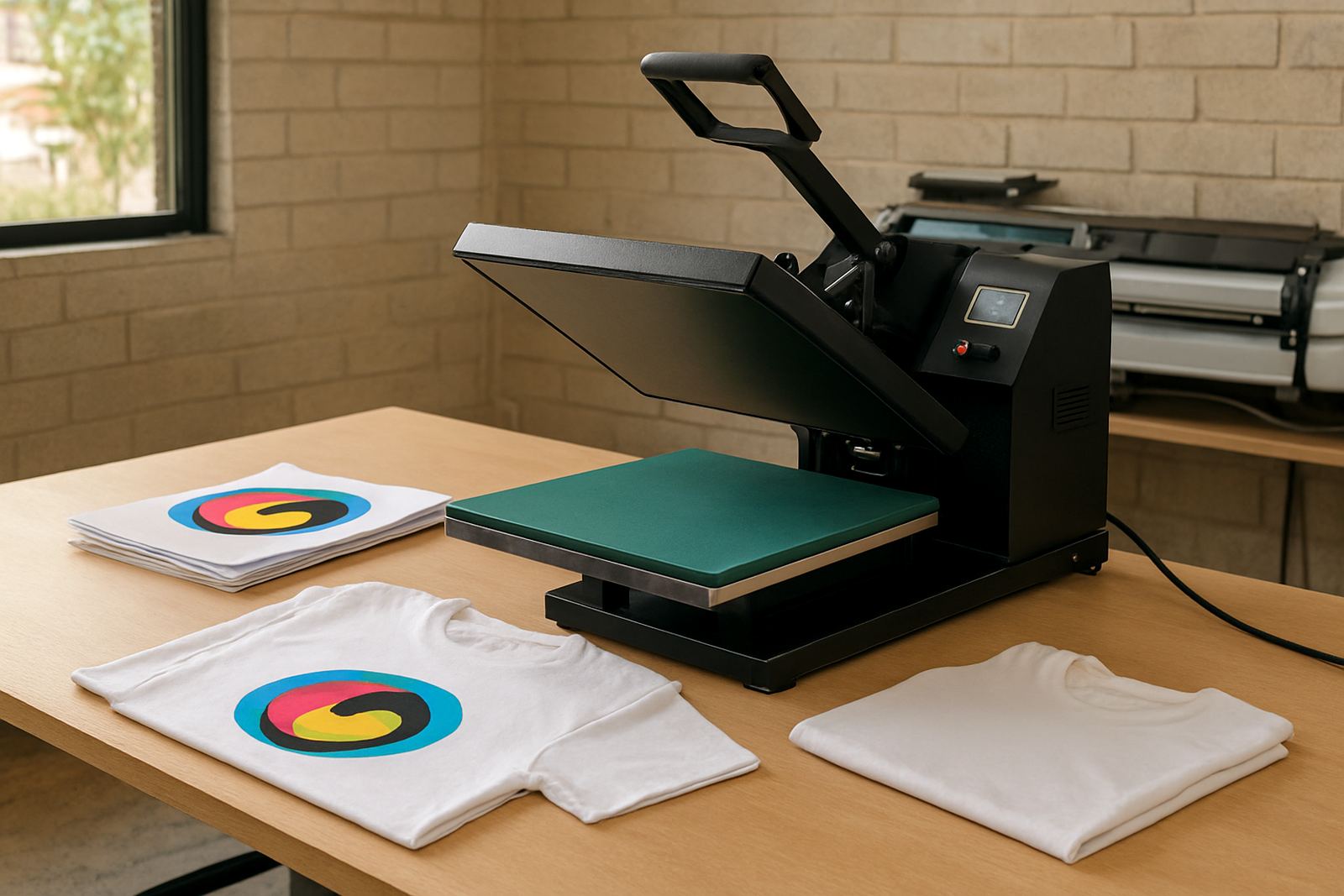
A clamshell heat press opens and closes on a top hinge, so the upper platen lifts away from the lower platen like a shell. That simple motion makes it easy to load shirts, badges, fabric panels and flat promo items without a lot of handling. For small to medium print rooms, it is a practical choice when you need clean heat transfer results on a steady basis, not just the odd sample.
It is commonly used for vinyl transfers, sublimation on suitable coated items, DTF finishing where a post press is needed, and heat applied labels. For garment decorators in Johannesburg, Pretoria and the East Rand, the compact footprint is often a big advantage when floor space is tight and the machine must sit close to a cutting table or finishing bench.
Because the pressure is applied from above, it is important to match the press to the kind of work you do. Light cotton tees, school wear, workwear and promotional bags all behave a little differently under heat, and a proper clamshell gives the operator repeatable settings once the right temperature, time and pressure are set. That consistency matters when you are doing 20 or 200 pieces in a shift.
Sizes and configuration options to consider
Clamshell presses are usually chosen by platen size and how the control system is set up. The most common working sizes are 38 x 38 cm, 40 x 50 cm and 40 x 60 cm, with larger formats used for bigger graphics or multi-panel work. A smaller platen is handy for labels, left chest marks and kidswear. A larger platen gives you more room for full front designs and larger promotional items.
When ordering, check whether you need a manual timer and temperature control, a digital display, or separate pressure adjustment. Some shops prefer a tabletop unit for one operator, while others need a heavier frame that stays planted during long runs. If the press will be used for different fabric types, look for an even heat surface and a platen that recovers temperature quickly between cycles. That helps when there are back to back orders and the room is busy.
- Platen size matched to your most common garment or label size
- Digital temperature and timer controls for repeat work
- Adjustable pressure for light fabrics and thicker workwear
- Heat resistant lower pad and stable frame
- Optional swap on platens for different product types
Where a clamshell press fits best
This type of press suits print shops that handle short runs, sample production and mixed item work. It is often used in apparel decoration shops, sign and label rooms, schoolwear suppliers, sportswear decorators and small factories that need in-house finishing. If your work includes branded T-shirts, reflective garments, name labels or event merchandise, the clamshell format gives you a dependable finishing step without a lot of setup time.
It also works well for operations that have to manage energy carefully. Compared with larger multi-station equipment, a single clamshell unit is easier to place, easier to power and quicker to bring into use after load-shedding. In many Gauteng workshops, that matters because jobs can restart as soon as the power is back and the temperature has recovered, rather than waiting for a more complex machine to stabilise.
For coastal clients in Durban, Gqeberha or Richards Bay, the press should be kept in a dry, covered area where humidity does not affect transfer media or electrical parts. In dusty industrial areas around the West Rand or near loading bays, a simple cover and regular cleaning also help protect the platen surface and controls.
Power needs, bench space and installation points
Most clamshell presses run on standard single phase power, which makes them suitable for small workshops and retail back rooms. Typical heating elements work around 1.5 kW to 3 kW depending on platen size and model. Before installing, confirm the supply voltage, plug type and whether the socket circuit can handle the load together with other equipment on the line. If you already run cutters, compressors or dryers, it is worth checking the total draw with your electrician.
Allow enough space for the top platen to open fully and for the operator to move garments in and out safely. A solid bench or stand is important because a press that rocks or flexes can affect pressure and operator comfort. Midrand installations often work well in rooms with good ventilation, a clean surface and a clear path for finished garments. If the press is going into a factory with multiple stations, keep it away from direct sunlight and from wash bays or steam areas.
- Single phase power is usually enough for smaller and mid size models
- Use a dedicated or well planned socket circuit where possible
- Keep the machine on a level, heat safe surface
- Leave room for the clam to open safely at the rear and top
Care, servicing and day to day handling
Like any heat machine, a clamshell press works best when the platen surfaces are kept clean and the pressure parts are checked often. Wipe away transfer residue while the machine is cool, and do not use sharp tools that can scar the platen cover. If you press coated items or printed media, a light build up of adhesive can transfer to the lower pad over time, so routine inspection prevents marks on the next job.
Operators should watch for uneven pressure, temperature drift and damaged wiring, especially if the machine is moved often or used in a busy production room. If the heating cycle seems slower than normal, or if the press is not closing squarely, it should be checked before the next run. Preventive maintenance is simpler than sorting out downtime after a sudden fault. We also recommend keeping a short record of temperature settings, dwell times and pressure for common materials, which helps new staff get consistent results.
For shops that run through peak season, we can advise on operator training, print workflow and spare part planning so the press stays productive. A well looked after unit can serve for years, but only if the hinges, heater and control system get attention before wear becomes a bigger problem.
What to confirm before you place the order
Before ordering, check the kind of work you will press most often. That includes garment size, transfer type, production volume and the finish expected by your customer. A press for name labels does not need the same platen size as a unit for adult front prints, and a machine used for schoolwear may need a different pressure range to one used for sports shirts. It helps to speak through your main jobs in plain terms so the right size can be matched first time.
Also confirm the available power, bench space and operator setup at your site. If the machine will be used across multiple branches or sent to a neighbouring country, ask about packing, transport protection and any import requirements on your side. Spare covers, Teflon sheets and a sensible maintenance plan are worth including at the same time, since they reduce delays once the press is running. A small missing item can hold up a whole batch, which is frustrateing when the order is already late.
- Main product types: garments, labels, bags or flat promo items
- Preferred platen size and whether swap platens are needed
- Power available on site and plug requirements
- Expected daily volume and operator skill level
- Accessories needed with the first order
Support from our Midrand team
From our Midrand base, we assist print shops across South Africa and neighbouring markets with machine installation, operator training, preventive maintenance, breakdown repairs, colour calibration, media profiling, printhead care, remote support, consumable planning and workflow advice. For a clamshell heat press, that means practical help with setup, safe use and keeping the unit working through busy production weeks. If your shop is in Sandton, Pretoria, the East Rand or further afield, we can talk through the right model for the job and the conditions on site.
Thabo Mokoena and the team work with customers who need direct answers, not guesswork. Whether you are adding a first press or replacing an older unit, we will help you check the details that affect everyday use so the machine suits your shop from day one.
Key facts
| Product type | Manual clamshell heat press for flat transfer work |
|---|---|
| Common platen sizes | 38 x 38 cm, 40 x 50 cm, 40 x 60 cm |
| Power supply | Single phase, typically 220 V to 240 V |
| Power draw | About 1.5 kW to 3 kW depending on model |
| Temperature range | Up to about 250 C on most units |
| Typical applications | T-shirts, labels, bags, workwear and promo items |