Two Tables, One Heat Head, Better Flow
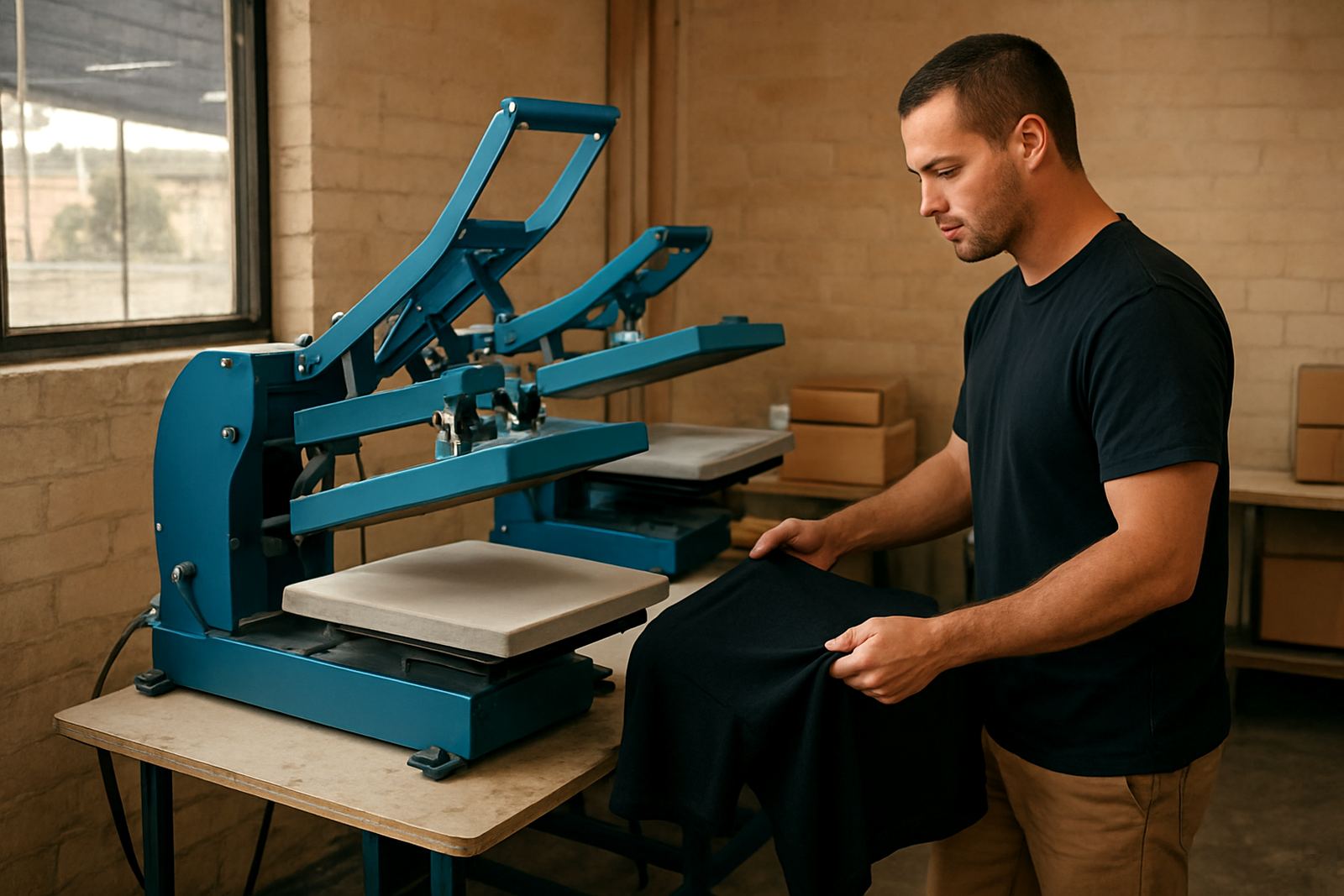
The dual station press is built for garment decoration shops that need quicker changeovers and cleaner rhythm on the floor. Instead of waiting for a single platen to cool between loads, the operator works between two stations while the heat head moves from one side to the other. This suits short-run colour work where every minute counts, especially when you are pressing mixed sizes, variable artwork or repeat orders through the day.
For a shop in Midrand, Pretoria or the East Rand, that extra loading space can make a noticeable difference during peak periods. You keep one station ready for pressing and the second one ready for loading, trimming the dead time that slows production. It is a practical fit for apparel decorators, label printers with transfer applications, and textile businesses that need a more organised workflow.
- Suitable for heat transfer vinyl and printed transfer sheets
- Works well for cotton, polycotton and many synthetic garment blends
- Useful where operators need space to stage the next garment while the current one is under heat
Sizes And Layout Options To Match Your Shop
Dual station presses are commonly supplied in working sizes around 38 x 38 cm, 40 x 50 cm and 40 x 60 cm, depending on the model and platen layout. Smaller formats suit compact work areas and sample runs, while larger platens are better when you need to press bigger chest graphics, back prints, schoolwear or workwear items. Some shops prefer a clamshell layout for tighter benches, while others go for a swing or shuttle-style unit where the stations are easier to access.
When choosing a size, think about the garments you handle most often, not only the biggest job you ever do. If you mainly press adult tees and hoodies, a 40 x 50 cm setup is often a sensible middle ground. If your work includes larger artwork, apron panels or branded leisurewear, the wider platen gives you more room to position transfers accurately.
- Compact options for limited floor space
- Mid-size units for general garment decoration
- Larger platen sizes for oversized artwork and mixed production
Where A Dual Station Press Fits Best
This press suits busy print rooms, garment decorators, schoolwear suppliers, embroidery businesses adding transfer work, and small label operations that need dependable heat application. It is also a good match for businesses that produce staff wear, promotional clothing and short-run retail items. The two-station setup helps when you have one person loading and another checking finish, or when a single operator needs to keep moving without stopping to wait.
In coastal areas like Durban or Gqeberha, humidity can affect storage of transfer media and finished garments, so a disciplined workflow matters. A dual station press helps you keep batches moving and reduces the chance of handling mistakes. In inland locations where load-shedding interrupts normal production, shops often pair the press with a sensible backup plan for lighting, irons or auxiliary equipment so the area stays usable. The press itself still needs stable electrical supply, and it should be protected from voltage swings.
- Print shops handling 20 to 200 items a day
- Workshops with one or two operators on transfer application
- Businesses that want faster loading without adding another machine straight away
Installation, Power And Workshop Setup
Installation is straightforward but should be done carefully. The machine needs a level stand or bench, enough clearance for the moving head and easy access for the operator on both sides. Most dual station presses run on standard single-phase electricity, commonly 220V to 240V, though exact requirements depend on the heater size and control system. A dedicated outlet is recommended, along with proper earthing and a breaker rated for the load.
It is worth checking the workshop environment before delivery. A press should not sit where dust, loose media or damp floors can cause problems. Leave enough space for garment staging, cutting tools and finished stock. If the business uses an inverter or generator during load-shedding, it must be sized correctly for heating equipment because presses draw steady power during warm-up and pressing cycles.
- Keep the machine on a stable, level surface
- Allow clearance for opening, loading and safe operator movement
- Use proper electrical protection and a suitable backup supply if the site relies on one
Heat Control, Pressure And Day-To-Day Care
Good pressing is not only about temperature. Even heat, correct pressure and clean platen surfaces matter just as much. A reliable dual station unit should give the operator simple temperature adjustment, a clear timer and pressure control that can be repeated from job to job. That consistency helps when you are pressing vinyl, direct transfer prints or layered artwork that needs careful timing.
Care is simple if you do it regularly. Keep the platen free of glue, dust and lint. Check the silicone pad or lower surface for wear, and replace it when pressure starts to become uneven. On busy sites, a monthly inspection of cables, switches and moving parts is a good habit. If a machine starts heating slowly, showing uneven results or tripping the supply, it should be checked before it interrupts production. A little servicing now saves a lot of downtime later, and avoids rushed rework.
What To Check Before You Place An Order
Before ordering, confirm the garments you plan to press, the sizes you need and the output you expect in a normal shift. It also helps to know whether you will mainly press transfers, vinyl or mixed media, because that affects platen size, pressure range and accessory needs. If the machine will be used in a team setting, ask about operator height, table position and how much room each station needs for comfortable loading.
Ask for the electrical specification, warm-up time, platen dimensions and temperature range so your site can be prepared properly. Also check what is included with the machine, such as lower platen covers, spare fuses or basic tools. For businesses working across South Africa and neighbouring countries, transport dimensions and crate weight are worth confirming early, especially if you are planning collection in Midrand or onward delivery to a branch in Pretoria, Sandton or further north.
- Garment type and transfer material you use most often
- Required platen size and floor space available
- Power supply, backup power and delivery access
Key facts
| Machine type | Two-station heat press for garment transfer application |
|---|---|
| Working size options | Commonly 38 x 38 cm, 40 x 50 cm, or 40 x 60 cm |
| Power supply | 220V to 240V single-phase, model dependent |
| Control features | Digital temperature and timer control with pressure adjustment |
| Applications | T-shirts, hoodies, workwear, schoolwear and transfer labels |
| Typical use | Short-run colour work, repeat orders and faster loading flow |