What a pretreat sprayer does in a DTG workflow
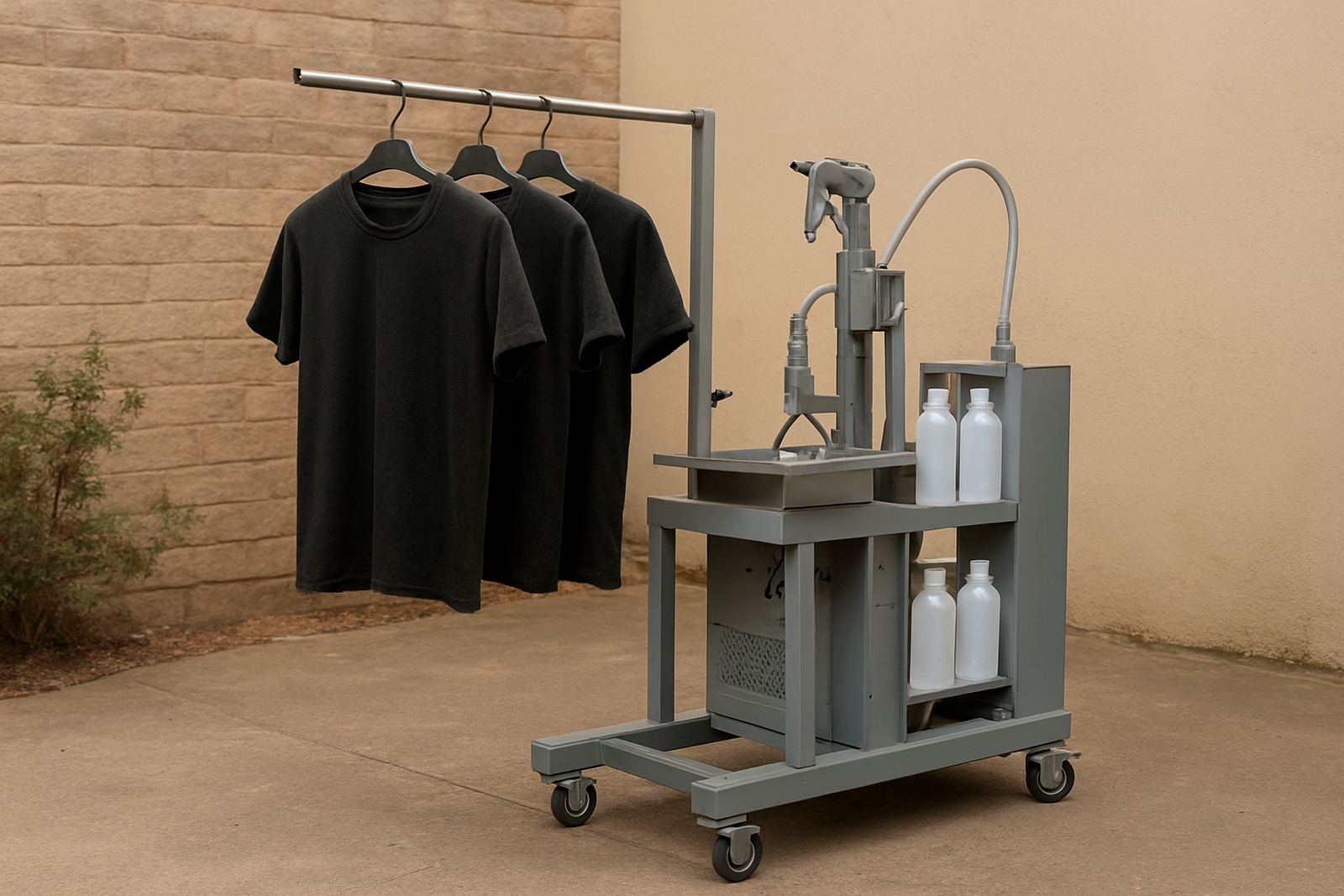
A pretreat sprayer applies pretreatment solution evenly across the print area on cotton, blends and selected dark garments before DTG printing. The aim is simple: better ink hold, cleaner whites on dark garments, and fewer marks from hand spraying. For shops running schoolwear, branded T shirts, event tees or sample jobs, a controlled spray pattern saves time and helps keep each shirt more consistent.
In a busy South African print room, that consistency matters when electricity interruptions, staff changes and rush orders all hit at once. A unit like this gives you a repeatable process for front, back or sleeve panels, and it reduces the risk of overspraying one piece and under treating the next.
Sizes, table space and spray area options
Pretreat sprayers are usually supplied with a flat working area sized for common garment panels. A practical setup often suits A3 to A2 print areas, depending on the shirt size and the spray head travel. If you are doing kidswear, ladies fashion, hoodies or larger front prints, check that the spray field covers your largest artwork area with a little spare margin.
- Working area options: about 400 x 500 mm up to 600 x 800 mm
- Garment support: flat platen or tray with adjustable stops
- Use case: single shirt or small batch pretreatment
- Output style: manual load with controlled spray pass
Midrand workshops often run on limited floor space, so footprint is worth checking before ordering. Leave room for loading, drying racks and a heat press or curing station nearby, otherwise the workflow gets tight very quickly.
Where a pretreat sprayer fits best
This equipment suits print shops that do garment decoration rather than bulk textile finishing. It is a good match for DTG rooms handling short-run colour jobs, names and numbers, custom gifts and fast reprints. If your work includes dark cotton, fleece, hoodies or blends that need controlled pretreatment, a sprayer helps you stay ahead of blotchy results.
It is also useful where staff turnover is high and training time must stay short. A set spray routine is easier to repeat than hand application with trigger bottles, and that can make a real difference in a shop that serves Johannesburg, Pretoria, the East Rand or customers across borders who need reliable turnaround.
- Best for short runs and repeatable garment prep
- Useful for cotton, poly cotton and selected dark garments
- Works well with sample approvals and on demand production
Power, air and workshop conditions to plan for
Most pretreat sprayers need standard single phase power and a clean, dry compressed air supply for the spray system. A typical shop should plan for 220V to 240V power and a compressor that can keep a steady output without pulsing too hard. If your area is prone to load-shedding, it helps to have a proper shutdown plan so the pump, controller and drying process are not interrupted mid cycle.
For air supply, dry air is important. Moisture in the line can affect spray consistency, especially in coastal humidity or during wet months. Keep the machine on a level floor, away from open windows, and do not place it where lint or overspray can build up around the nozzles. Municipal water is not required for operation but you do need a clean rinse routine if your model uses washable parts.
Allow space for a nearby heat press, flash dryer or curing stage depending on your DTG method. The pretreat step and the drying step should be close together so garments do not pick up dust before printing.
Installation, setup and operator training
Installation usually includes positioning the unit, checking power and air connections, setting the spray width and testing the pass rate on sample garments. In our experience, a good setup is about more than plugging in a machine. The pretreat amount must suit your fabric, your artwork coverage and your curing method, otherwise you use too much chemical or get dull whites on dark fabric.
We recommend a proper test day with plain tees, hoodies and a few problem garments before moving into daily production. That is the time to set spray distance, pass speed and garment placement stops. Where needed, operator training should cover loading, cleaning, safe handling of pretreatment liquid and what to do when the spray pattern shifts. A missed nozzle can spoil a batch quickly, so the team must know what normal looks like.
Care, servicing and what to check before you order
Like any production tool, a pretreat sprayer needs regular care. Nozzles should be cleaned before residue builds up, the tray should be wiped down daily, and the line should be checked for blockages. If pretreatment dries inside the head, you can get uneven coverage and streaking on the shirt. That is why preventive maintenance is better than waiting for a breakdown.
Before ordering, check the garment sizes you print most, the type of fabric, and the room you have for loading and drying. Also confirm the spray area, power supply, compressor requirement and whether you need left handed or right handed loading flow. If you print across multiple sites in Gauteng or supply from Midrand to other provinces and neighbouring countries, ask about spares, consumables and support response times so the machine keeps earning its keep.
- Check your usual garment sizes and print area
- Confirm power, air and floor space before delivery
- Ask about nozzle care, spares and service intervals
- Match the unit to your daily garment volume
Key facts
| Machine type | Garment pretreatment sprayer for DTG workflows |
|---|---|
| Power | 220V to 240V single phase, subject to model |
| Air supply | Clean dry compressed air required |
| Working area | Approx. 400 x 500 mm to 600 x 800 mm options |
| Typical garments | T shirts, hoodies, sweatshirts, blends and sample pieces |
| Best use | Short run pretreatment for improved adhesion and print brightness |