

Mug Transfer Press
Home / Printers / Mug Transfer Press

Printers

Mug Transfer Press

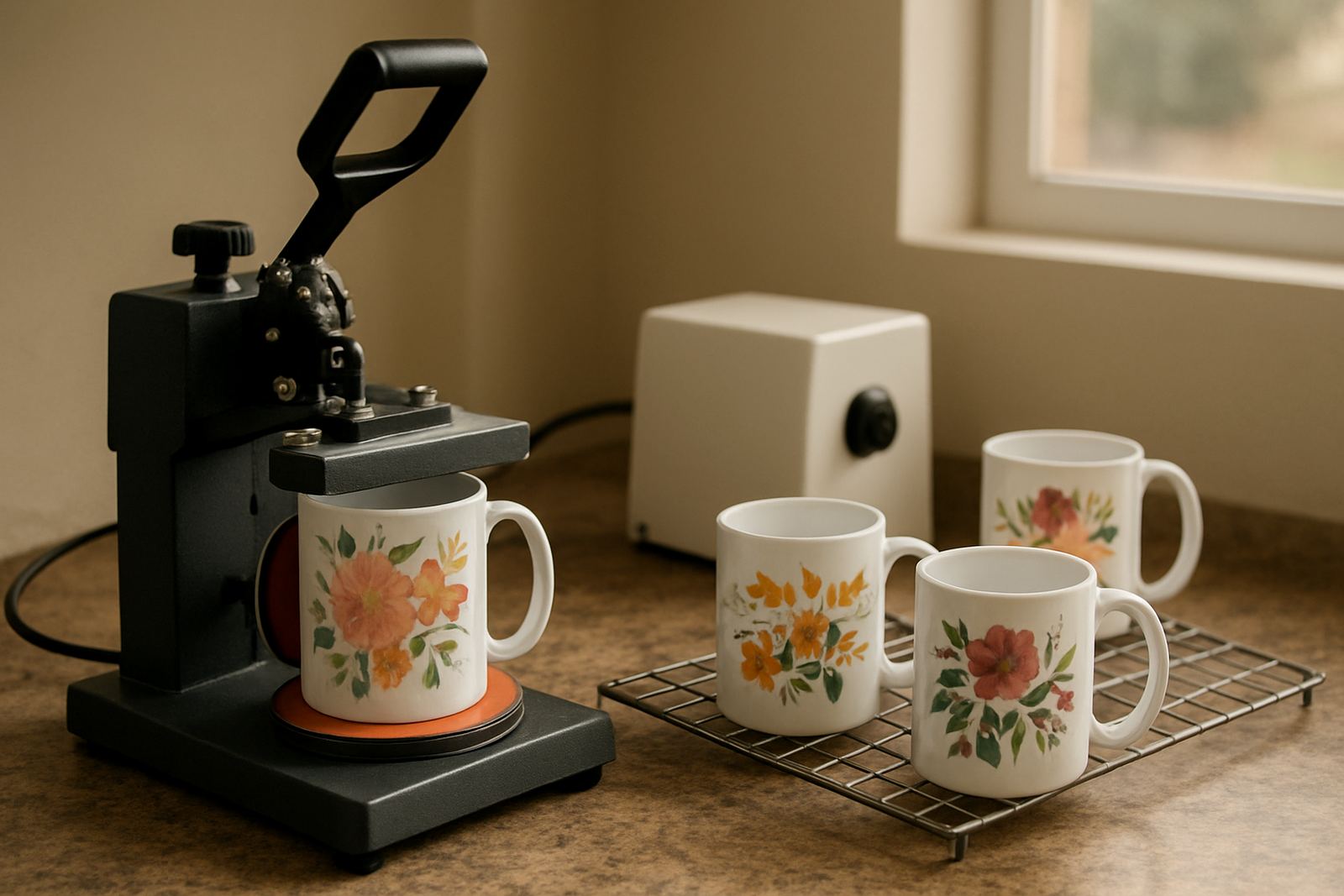
A mug transfer press is built for printing names, logos, photos, and event artwork onto coated mugs and similar drinkware. It suits small to mid-volume shops that need tidy, repeatable results for gift orders, promotions, and print-on-demand work.

What the Mug Transfer Press Does on the Shop Floor

This press applies heat and pressure around a mug so a printed transfer bonds to the coated surface. It is a practical option when you need short-run colour work, tight turnaround, and consistent placement on standard 11 oz mugs, larger latte mugs, and other cylindrical items where the coating is suitable.

For print shops in Midrand, Johannesburg, Pretoria, and further afield, the main advantage is control. You can run one mug for a walk-in customer or a batch for a corporate job without setting up a full production line. The compact footprint also helps in smaller production rooms where space is already shared with cutters, heat presses, and packing tables.

  • Suitable for sublimation transfers on coated mugs
  • Good for names, photo mugs, event gifts, and promo orders
  • Compact enough for small workshops and retail back rooms
  • Works well for short runs where speed and consistency matter

Sizes, Mug Options, and Typical Output

Most mug transfer presses are set up for standard cylindrical mugs, but many shops also want a unit that can take slightly larger drinkware. When comparing options, check the mug diameter range, the heater wrap size, and whether sleeves or interchangeable elements are available for different items.

For everyday use, a press that handles the common 75 mm to 85 mm mug diameter range covers a large share of local orders. If you do promotional work for schools, churches, estate agents, or sports clubs, the ability to change heating elements can make a real difference. A machine that accepts straight drinkware, latte mugs, or narrow tall cups gives you more value from the same footprint.

  • Standard mug size: about 11 oz, often 95 mm high
  • Common diameter range: 75 mm to 85 mm
  • Optional elements may suit latte mugs or larger ceramic drinkware
  • Check whether the control is digital or analogue before ordering

Where This Press Fits Best

This type of press suits print shops, home-based businesses, school fundraising work, and promotional suppliers who need reliable output without heavy industrial machinery. It is also useful for businesses that take urgent local orders, because mug branding often needs to be turned around same day or next day.

In South African conditions, the press should be easy to operate during load-shedding recovery and stable enough for repeated daily use. If you serve customers in humid coastal towns or dusty inland areas, keep the work area clean and dry so paper, coatings, and mugs stay in good condition. For shops that ship into neighbouring countries, the machine must also tolerate regular movement and careful packing between jobs.

  • Gift shops and print shops with short-run colour work
  • Corporate branding for conferences, staff gifts, and campaigns
  • Personalised mugs for schools, clubs, and community events
  • Small production rooms where space and power use matter

Power Setup, Installation, and Operating Needs

Installation is normally straightforward. Most mug transfer presses run from standard single-phase electricity and plug into a normal workshop supply, although the exact wattage should always be confirmed before delivery. Because heating elements draw power quickly, it is wise to use a stable socket, avoid overloaded multiplugs, and allow for proper ventilation around the unit.

A clean, level surface is important for even pressure. If the press is going into a production area with other heat equipment, leave enough room to load mugs safely and to work without bumping the heated element. In many shops, a short operator demonstration saves a lot of spoilage. We also advise checking the transfer size, mug coating, and heat timing before the first paid order.

  • Usually needs standard single-phase power
  • Works best on a stable, level counter or table
  • Allow space for loading and safe cooling after pressing
  • Operator training helps reduce wasted mugs and print faults

Care, Cleaning, and Servicing Over Time

Like any heat-based machine, this press lasts longer when it is cleaned and checked regularly. Keep transfer residue, dust, and adhesive build-up off the element and working surfaces. The mug clamp should close evenly, and the pressure should feel consistent from one job to the next. If the heat reads correctly but the transfer is patchy, the cause is often pressure, mug coating, or timing rather than the artwork itself.

Preventive maintenance is worth doing before busy periods. Shops that run events, school batches, or end-of-month promotional work should check heater condition, cable wear, and temperature accuracy ahead of time. If a press is stored in a humid room near the coast, inspect metal parts more often for corrosion. A simple service routine can prevent down time when orders are lined up.

  • Wipe the element and pressure surfaces after use
  • Check temperature accuracy and pressure consistency regularly
  • Inspect cables, plugs, and clamps for wear
  • Store in a dry area when not in use

What to Confirm Before You Place an Order

Before buying, make sure the press matches the mugs you actually sell. Many suppliers lose time and money because the machine fits one mug size but not the drinkware customers ask for. It is also important to confirm your daily volume, as a machine for five mugs a day is not the same as a unit expected to handle 50 mugs during peak season.

Ask about replacement elements, temperature range, and warranty support. If you operate across Gauteng, the Free State, the North West, or into Botswana and Namibia, check how spares and technical help are handled. For production planning, it helps to know whether the machine supports repeatable settings, since that saves time when the same artwork comes back later in the month.

  • Mug size and diameter range
  • Heater element type and whether it can be replaced
  • Temperature range, timer control, and pressure adjustment
  • Daily output expectations and spare part availability

Key facts

Machine typeSingle-station mug transfer press
Typical mug sizeStandard 11 oz mugs, approx. 75 mm to 85 mm diameter
PowerSingle-phase electric supply, check wattage before installation
ControlDigital or analogue control depending on model
Use caseSublimation transfer printing on coated mugs and drinkware
SupportInstallation, operator training, preventive maintenance, breakdown repairs

What clients say

Questions we get asked

Can this press handle more than one mug size?

Some units take interchangeable heating elements for different diameters or taller drinkware. Confirm the exact mug sizes you plan to run before ordering.

Do I need special power for a mug transfer press?

Most units use standard single-phase electricity, but the wattage must be checked. Use a stable socket and avoid overloaded extension leads.

What causes poor print results on mugs?

Common causes are wrong time or temperature, uneven pressure, low-quality coated mugs, or artwork that was not prepared for the transfer process.

Planning something? Email the team.

hello@cmykindustries.co.za