What this UV label printer is made to do
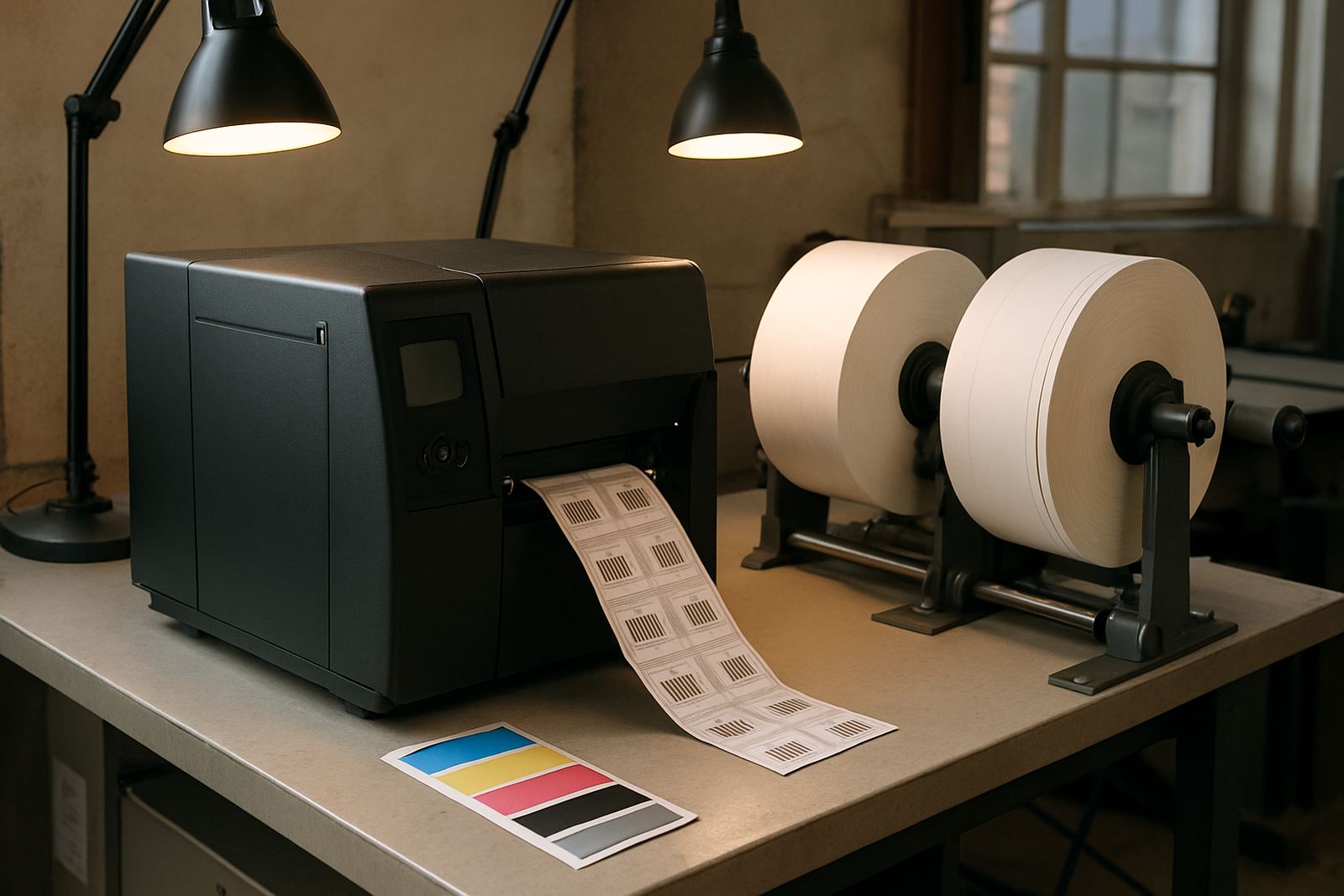
This machine is suited to label work where colour accuracy, fine detail, and repeatable output matter. It uses UV-curable inks to print onto compatible label materials, including coated stocks and synthetic media used for packaging, product identification, and short production runs. It is a practical option for shops handling mixed orders where turnaround times are tight and reprints must match the first job.
For many South African print rooms, the appeal is simple. You can move from one label job to the next without long setup times, and you can handle a wider range of short-run work without holding large stocks of preprinted labels. The printer is especially useful where clients want smaller quantities, more colour variation, or faster seasonal changes.
Because this is specialist equipment, media choice matters. A correct material pairing gives better adhesion, sharper text, and cleaner curing. If the substrate is not suited to UV ink, print quality and durability will drop off quickly.
Typical sizes, formats, and output options
UV label printers in this class are usually supplied in compact to mid-size formats for rolls of label media. Common working widths suit narrow labels for bottles and sachets, as well as wider formats for cartons, pouches, and retail branding. Depending on the configuration, a printer may handle one-up labels, multi-up layouts, or continuous rolls with die-cut finishing later in the line.
Output options can include variable data, serial numbering, dense colour blocks, and fine text for ingredients, barcodes, or compliance details. Where needed, the machine can be paired with cutting or rewinding equipment to keep production moving. A number of shops also use it for proofing before they commit to larger runs.
- Suitable for roll-fed label production
- Works with selected coated and synthetic stocks
- Good for short-run colour jobs and repeat orders
- Can be paired with finishing, cutting, or rewind systems
In practice, the exact size you need depends on your main label work. A food producer in Midrand may need a different setup from a cosmetic or chemical label shop in Pretoria, so it helps to match the machine to the widest label and the busiest daily volume, not just the average job.
Where it suits best in South African print shops
This type of printer suits businesses that produce labels for local brands, contract packing, niche retail, and industrial identification. It also fits shops that are already doing garment decoration or short-run digital print and want to add label work without bringing in a large offset or flexo line. For many operators, it fills the gap between entry-level desktop output and full-scale industrial converting.
It is a strong match for print shops serving Johannesburg, Sandton, Pretoria, the East Rand, and the West Rand, where customers often need quick proof-to-production turnaround. It also helps when serving neighbouring countries that expect steady supply and simple repeat ordering. If your clients are asking for smaller batches, more versions, or frequent artwork changes, this printer can make the quoting process easier.
- Product labels for food and beverage packs
- Cosmetic and personal care labels
- Household and cleaning product labels
- Short-run industrial labels and warning stickers
- Promotional labels and seasonal packs
It suits businesses that need colour consistency across batches and do not want to wait for large minimums. That matters when orders change week by week, especially where a client may need 200 labels today and 1 000 next month, same artwork, same finish.
Installation, power, and site requirements
Installation should be done on a clean, level surface with enough room for roll loading, operator access, and media movement. Keep the machine away from dust, direct sunlight, and open workshop traffic. In coastal or humid conditions, label stock should be stored properly before use so that curl and moisture do not affect feeding.
Power requirements vary by model, but most units need stable single-phase electrical supply and proper earthing. Because load-shedding and voltage dips can damage electronics, many shops in Gauteng use surge protection or a suitable power backup setup. If the printer is linked to a curing or extraction system, make sure those components are planned into the site layout too.
Gas is not normally required for this kind of label printer. What matters more is clean power, correct ventilation for the work area, and a controlled room temperature. If the machine uses any auxiliary curing or finishing equipment, check the manufacturer’s electrical load before ordering so your switchboard can cope.
- Allow space for feed, take-up, and operator access
- Use stable power with surge protection
- No gas supply is generally required
- Keep media dry and acclimatised before printing
Care, servicing, and daily print-room discipline
Good results depend on routine care. Printheads should be checked often, especially if the machine is standing idle between jobs. Short-run work can mean more stop-start use, so cleaning schedules need to be followed properly and not left until a fault appears. Wiping down the machine, checking rollers, and keeping the media path free of dust will prevent many avoidable problems.
Preventive maintenance is worth planning from the start. That includes nozzle checks, colour calibration, media profiling, and periodic inspection of curing and feed components. If the printer is used daily in a busy shop, book servicing before peak periods rather than after the machine has already started missing lines or laying down uneven colour.
Operators should also be trained on the right material settings and handling steps. A simple mistake with stock type, tension, or humidity can cause wasted labels and unnecessary downtime, which is never welcome when a client needs a same-day repeat run.
- Daily nozzle checks and light cleaning
- Keep ink and media stored correctly
- Use proper colour profiles for each stock type
- Schedule preventive maintenance before busy periods
What to check before you place an order
Before ordering, confirm the label width, roll diameter, and core size you plan to run most often. Check whether your main jobs use coated paper or synthetic stock, and make sure the printer is compatible with those materials. If you work with chemical, beverage, or outdoor labels, ask about adhesion and resistance requirements so you do not buy a machine that suits the wrong application.
You should also confirm your expected daily volume, because a machine that handles occasional short runs may not suit a shop running all day. Ask about colour channels, speed at the needed quality level, and whether the unit can be integrated with your current finishing process. If you need training, installation, remote support, or consumable planning, it is better to plan that upfront than scramble later.
For shops in Midrand, Sandton, Pretoria, the East Rand or further across Southern Africa, the right fit usually comes down to practical details: the stock you use, the space you have, the power available, and the speed your customers expect. Get those sorted first and the printer will work harder for your business.
Key facts
| Print type | UV-curable label printing for selected coated and synthetic media |
|---|---|
| Media format | Roll-fed labels, narrow to mid-width depending on configuration |
| Common uses | Product labels, barcodes, short-run branding, variable data |
| Ink system | UV ink set for colour work and fast curing |
| Power needs | Stable electrical supply with surge protection recommended |
| Support options | Installation, operator training, maintenance, repairs, profiling, remote support |